Traditional Lettering for Graphic Design
Lettering before desktop publishing
Choosing appropriate lettering for your logo design helps a startup business develop a recognisable identity. The history of lettering in graphic design includes hand-drawn artwork, metal type, phototypesetting and transfer lettering. Before desktop publishing became widespread, producing a page could involve several specialist processes rather than one software application. Either at home or in the office, Letraset was your first port of call for transferring typefaces onto page. Designers used markers, drawing instruments and Cow Gum for paste-up work, while simple printing sets offered another way to experiment with letters. These tools required care with alignment, spacing and placement: details that remain central to typography even when the work is digital.
Leaflets and reports can now be assembled using desktop publishing software and online tools. That change made revisions easier, but understanding the earlier techniques helps explain the terminology and design decisions that still shape a page.
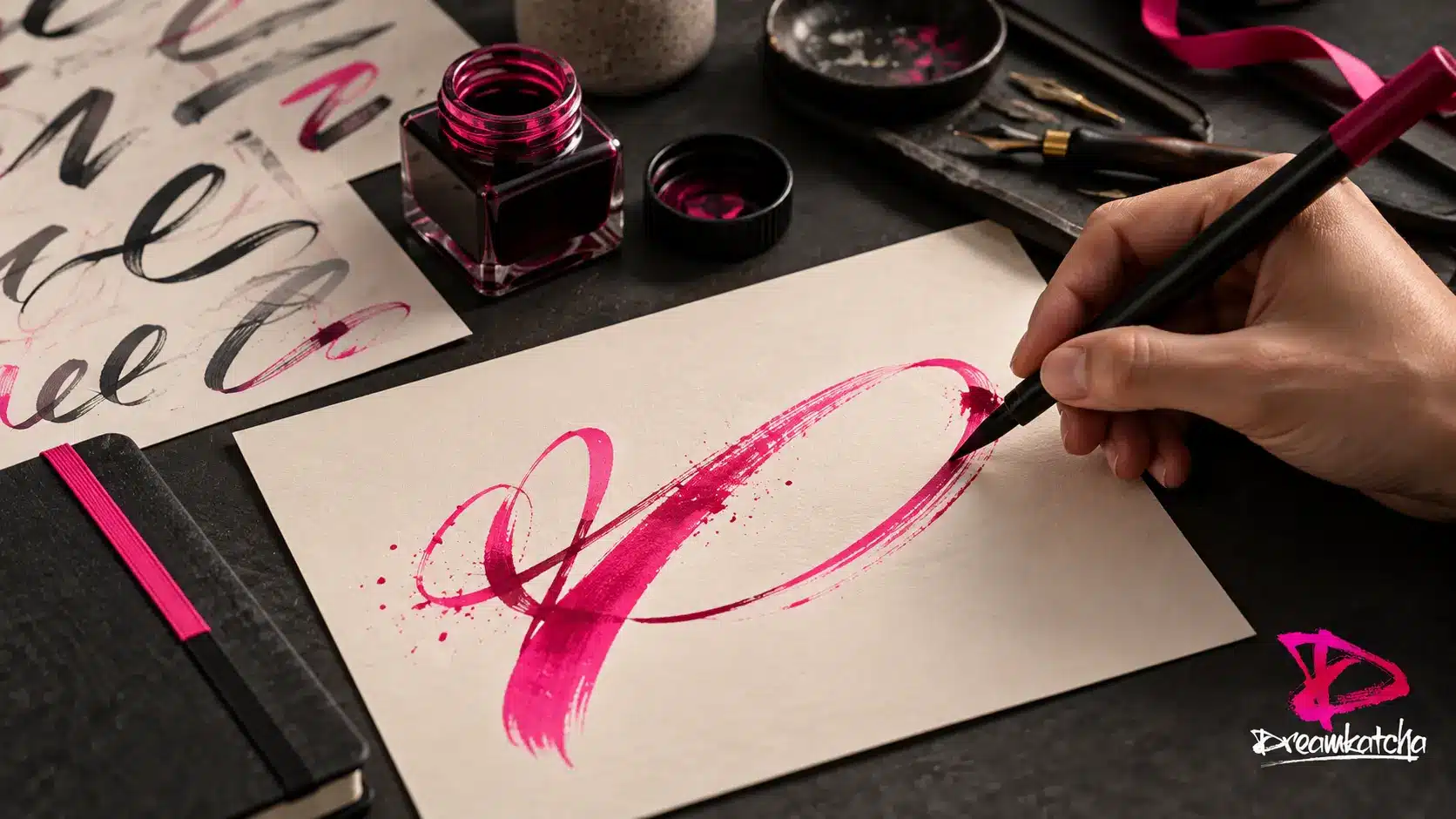
This historical post revisits three lettering methods through demonstration clips: the Kroy system, the Leroy lettering set and Letraset dry transfers. Each clip offers a useful comparison with how the same task is approached on screen.
Kroy lettering system
The 1983 Kroy demonstration predates the Macintosh’s 1984 launch. The Kroy system offered another approach to producing lettering. The Computer History Museum’s desktop publishing history describes the later significance of PageMaker and the LaserWriter in 1985.
Leroy lettering set
Before Comic Sans MS, comics had manually written text. There was also another way: the Leroy lettering set. This enabled you to copy text from a strip of letters and punctuation marks. It was a useful tool for cartoonists and technical drawing.
Letraset dry transfer lettering
Letraset dry-transfer sheets offered a hands-on way to apply ready-made letters. Designers selected a character, positioned the sheet and rubbed the letter onto the artwork. Available in different typefaces and sizes, the sheets demanded careful spacing and alignment. The demonstration shows the process that preceded much of today’s digital page assembly.
Contact Dreamkatcha today to discuss a web design or logo design project.
Dreamkatcha, 13 December 2016.